Monday, October 16, 2023

FUNGAL NAIL TREATMENT

FUNGAL NAIL TREATMENT

Fungal nails
Fungal nails


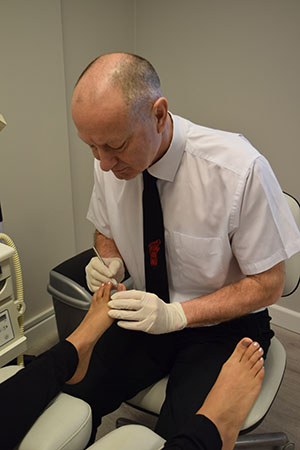
Our Fungal nail treatment services are offered by professional podiatrists or dermatologists, to diagnose and treat fungal infections of the nails (onychomycosis). Fungal nail infections can be both unsightly and uncomfortable, and they may lead to further complications if left untreated. Here are the key components of fungal nail treatment services:

1. Diagnosis: The first step in treating a fungal nail infection is an accurate diagnosis. We will examine the affected nails, possibly take nail clippings or scrapings for laboratory testing, and review the patient's medical history to confirm the presence of a fungal infection.

2. Treatment Options: Once diagnosed, we will discuss available treatment options with the patient. These options can include:

   - Topical Antifungal Medications: Over-the-counter or prescription topical antifungal creams, ointments, or nail lacquers may be recommended. These are applied directly to the affected nails.

   - Oral Antifungal Medications: In cases of severe or resistant fungal infections, oral antifungal medications may be prescribed. These medications are taken by mouth and are typically more effective, but they can have side effects and may require monitoring.

     - Nail Debridement: The healthcare provider may trim, thin, or remove the infected nail to help topical antifungal treatments penetrate the nail more effectively.

   - Laser Therapy: We offer laser therapy as a treatment option for fungal nail infections. This involves using laser technology to target and kill the fungus.

3. Education: We educate patients on proper foot and nail care to prevent reinfection and promote overall nail health. This includes information on maintaining proper hygiene, using antifungal products, and selecting appropriate footwear.

4. Follow-up Appointments: Regular follow-up appointments are often recommended to monitor progress and adjust the treatment plan as necessary. It may take several months for a new, healthy nail to grow in.

5. Prevention: Patients are advised on preventive measures to reduce the risk of future fungal nail infections. This can include keeping feet dry and clean, wearing breathable shoes and moisture-wicking socks, and avoiding walking barefoot in communal areas like locker rooms and pool areas.

6. Custom Orthotics: In some cases, custom orthotic inserts may be recommended to address any underlying biomechanical issues that contribute to recurrent fungal nail infections.

7. Counseling: We offer counseling on lifestyle changes that can help reduce the risk of fungal infections, such as dietary adjustments to strengthen the immune system.

8. Surgical Intervention: In very severe cases where the infection is causing significant pain or complications, surgical removal of the affected nail may be considered.

Our Fungal nail treatment services aim to not only eliminate the infection but also improve the appearance and health of the affected nails. It's important for patients to follow the recommended treatment plan and maintain good foot hygiene to prevent recurrence. Additionally, early intervention is crucial, as fungal nail infections can become more challenging to treat if left untreated for an extended period.

Monday, September 25, 2023

Routine Foot care


Foot care (routine)


Routine Foot Care


Routine foot care for older individuals is essential to maintain foot health, prevent discomfort, and reduce the risk of more serious issues that can arise as people age. Here are some key practices and tips for providing routine foot care for older individuals:


1. Daily Foot Inspection: Encourage older individuals to inspect their feet daily. Look for any changes in skin color, temperature, cuts, sores, blisters, corns, calluses, or ingrown toenails.


2. Proper Foot Hygiene: Regularly wash the feet with mild soap and warm water. Ensure thorough drying, especially between the toes, to prevent fungal infections.


3. Nail Care: Keep toenails trimmed straight across and not too short. Avoid cutting into the corners, as this can lead to ingrown toenails. If they have difficulty reaching their feet, a podiatrist can assist with nail care.


4. Moisturize: Apply a moisturizing cream or lotion to keep the skin on the feet hydrated, especially if the skin is dry or prone to cracking. Avoid applying lotion between the toes, as it can lead to fungal infections.


5. Proper Footwear: Ensure that older individuals wear well-fitting, comfortable, and supportive shoes. Shoes should have sufficient room for toes and good arch support. Avoid high heels and shoes that are too tight.


6. Orthotic Inserts: If necessary, consider custom orthotic inserts to provide additional support and cushioning.


7. Foot Exercises: Encourage simple foot exercises to improve circulation and flexibility. Exercises may include ankle circles, toe curls, and heel raises. Consult a healthcare professional for specific exercises.


8. Compression Stockings: If recommended by a healthcare provider, use compression stockings to improve circulation and reduce swelling in the legs and feet.


9. Manage Chronic Conditions: For individuals with conditions like diabetes or circulatory issues, it's crucial to manage these conditions well to prevent foot complications. Regular check-ups with a healthcare provider are essential.


10. Regular Podiatric Check-ups: Older individuals should schedule regular appointments with a podiatrist for professional foot care. Podiatrists can help with issues like corns, calluses, ingrown toenails, and other foot problems. They can also provide guidance on proper foot care.


11. Foot Protection: Encourage older individuals to protect their feet from extremes of temperature and injury. They should avoid walking barefoot and use appropriate footwear when outdoors.


12. Fall Prevention: Falls can result in serious foot injuries. Ensure the home environment is free of hazards, and consider using non-slip mats and handrails to prevent falls.


13. Proper Footwear for Specific Activities: When engaging in physical activities or exercise, make sure they wear the right footwear for the task.


14. Prompt Attention to Problems: If any foot issues or discomfort arise, older individuals should seek prompt medical attention. Delayed treatment can lead to complications.


It's important to remember that the foot care needs of older individuals may vary based on their health conditions and mobility. Regular communication with a healthcare provider, such as a podiatrist, is crucial to address specific concerns and ensure proper foot care for their unique situation.


Medicare doesn’t usually cover routine foot care.

Your costs in Original Medicare

You pay 100% for routine foot care, in most cases.

What it is

Routine foot care includes:

  • Cutting or removing corns and calluses
  • Trimming, cutting, or clipping nails
  • Hygienic or other preventive maintenance, like cleaning and soaking your feet

Sunday, September 24, 2023

Professional Foot Care Services


Professional Foot Care Services speciality gives you more choice

Chiropodist services are an integral aspect of healthcare that focus on the diagnosis, treatment, and prevention of various foot and lower limb conditions. Chiropodists are skilled professionals who play a vital role in promoting overall foot health and mobility. Their expertise extends to addressing issues such as foot pain, structural abnormalities, injuries, skin and nail disorders, and conditions related to the lower extremities.

The primary goal of chiropodist services is to enhance the quality of life for individuals by providing comprehensive care for their feet and lower limbs. Ailments in these areas can significantly impact a person's mobility and overall well-being, making the role of chiropodists essential.

Our chiropodists employ a diverse range of clinical skills and tools to assess, diagnose, and treat a wide spectrum of conditions. These services include routine foot care, biomechanical assessments, the creation of custom orthotics, wound care, surgical interventions when necessary, and the management of chronic foot-related issues.

Additionally, our chiropodists educate patients on proper foot care and offer guidance to prevent future problems. Their ability to provide personalized treatment plans, grounded in evidence-based practices, ensures that patients receive the most appropriate care for their specific needs.

Remember that the quality of chiropodist services may vary, so it's essential to do some research, ask for recommendations, and consult with the chiropodist to ensure they meet your specific needs and expectations.
  • Routine Foot care - traditional chiropody
  • Fungal nail infection - this unsightly condition is often resistant to treatment. Professional Foot Care employs the most up-to- date method of treatment - the Clearanail system - to address this disorder. Clearanail painlessly introduces minute holes into the nailplate which then allows an antifungal spray to reach the very source of the infection.
  • Ultrasound therapy - this is used to treat foot injuries or deep-seated aches and pains. Individual applications are quick, painless, and effective.
  • Childrens feet - not all foot problems begin in adulthood. Often children display slight abnormalities which can be ignored; this may occur because they cause little discomfort at this stage. However, if left alone they can develop into increased problems later in life.
  • Minor surgery - nail problems, verrucae, superficial skin lesions. These painful complaints can be successfully cured under local anaesthesia with little disruption in lifestyle.
  • Biomechanics - this is the study of the limb and foot in motion. Many people suffer from acute or chronic pain in the foot, lower limb, or even in the lower back. Often the cause of this complaint is misalignment of the feet (just as trouble with foundations of a house causes cracks by the bathroom window, so can lower back problems, for example, be caused by lack of stability in the feet). Athletes, joggers and other sporting people can often benefit from biomechanical assessment as well as those of us who prefer a less energetic lifestyle.
  • Foot surgery - Professional Foot Care we can offer comprehensive advice on full surgery of the foot and often facilitate this where necessary through your GP.

Total Foot Care

Foot Care Professionals

Professional Foot Care is the podiatry practice where advice/treatment is offered for a complete range of foot problems. Issues with the feet occur in all age groups and range from the minor, irritating problem to the completely disabling. Led by a vastly experienced foot care specialist, Foot Care offers a comprehensive service which can address all forms of foot disorders.


A consultation and routine treatment is offered at a modest price. More complex problems may require advanced forms of treatment which will naturally cost more than routine care. However, even these advanced treatments are offered at an affordable price.

Our podiatry care focuses on the diagnosis, treatment, and prevention of medical conditions and injuries related to the feet, ankles, and lower extremities. Practitioners in this field are known as podiatrists or doctors of podiatric medicine (DPM). Our Podiatry practice encompasses a wide range of services and responsibilities, including the following:

1. **Assessment and Diagnosis:** Podiatrists conduct thorough assessments to diagnose a variety of conditions and issues, such as foot and ankle pain, structural abnormalities, skin and nail disorders, infections, and sports-related injuries. They may use diagnostic imaging, such as X-rays or MRI, to aid in their assessments.

2. **Treatment:** Our Podiatrists employ various treatment methods, which can include conservative approaches like orthotics (custom shoe inserts), physical therapy, medication, and wound care. In some cases, surgical interventions may be necessary to correct deformities, remove growths, or address severe injuries.

3. **Orthopedic Care:** Our podiatrists specialize in orthopedic podiatry, focusing on the musculoskeletal aspects of the feet and lower limbs. They are trained to assess and treat conditions related to posture, gait, and biomechanics. Custom orthotics are often prescribed to address alignment issues and provide support.

4. **Foot Surgery:** Our Podiatrists are qualified to perform various surgical procedures on the feet and ankles, ranging from minor procedures like ingrown toenail removal to more complex surgeries such as bunion correction and joint reconstruction.

5. **Wound Care:** Our Podiatrists play a crucial role in managing and treating wounds on the feet, especially in patients with diabetes or circulatory disorders. They are skilled in preventing, diagnosing, and treating foot ulcers to avoid complications such as amputation.

6. **Sports Medicine:** Our Podiatrists also specialize in sports podiatry, providing care for athletes dealing with foot and lower limb injuries. They offer rehabilitation, preventive strategies, and treatment to optimize athletes' performance and recovery.

7. **Preventive Care:** Our Podiatrists emphasize preventive care and education, encouraging patients to maintain proper foot hygiene and select appropriate footwear to reduce the risk of injuries or conditions.

8. **Geriatric Care:** Many elderly individuals experience foot problems, and podiatrists are instrumental in providing care to this demographic. They address age-related issues, such as arthritis, circulatory problems, and fall prevention.

9. **Collaboration:** Our Podiatrists often work in collaboration with other healthcare professionals, such as orthopedic surgeons, physical therapists, and primary care physicians, to provide comprehensive care for patients with complex medical issues.

10. **Education and Awareness:** Our Podiatrists educate patients on foot health, emphasizing the importance of regular check-ups and early intervention to address foot conditions and prevent complications.

Podiatry practice is essential in maintaining overall health and mobility, as the feet and lower limbs are critical for daily activities. Whether it's managing chronic conditions or providing surgical solutions, podiatrists contribute significantly to their patients' well-being and quality of life.

All disorders of the feet are dealt with; treatments can range from routine care - nail care, callouses and corns, dry skin etc - to minor surgery such as correcting painful ingrowing toenails and obstinate verrucae and to consideration of surgical correction of foot deformities.

A full range of foot accessories are available such as moisturisers, anti-fungal preparations, protective devices for pressure areas of the foot and orthoses (devices which are worn in the shoes to correct disorders of balance or gait). Whatever the foot complaint, small or large, Foot Care Professionals can provide the required assistance.

FUNGAL NAIL TREATMENT

FUNGAL NAIL TREATMENT Fungal nails Our Fungal nail treatment services are offered by professional podiatrists or dermatologists, to diagnose...